
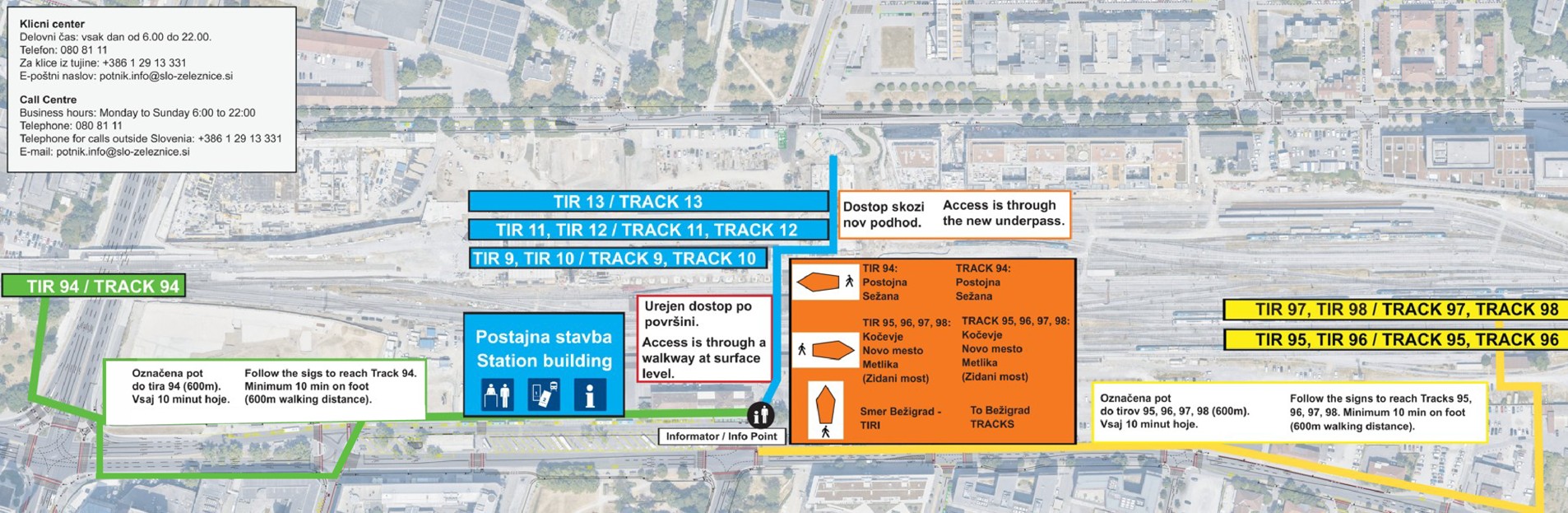
Maribor railway station holds a special place in the city’s history — not only as a transport hub, but also as a symbol of economic development, technological progress, and architectural heritage.
Its story begins in the mid‑19th century, and today the station shines once again after the complete renovation of the platform infrastructure and underpass (2021), as well as the thorough refurbishment of the main hall and the station forecourt, completed in early 2026.
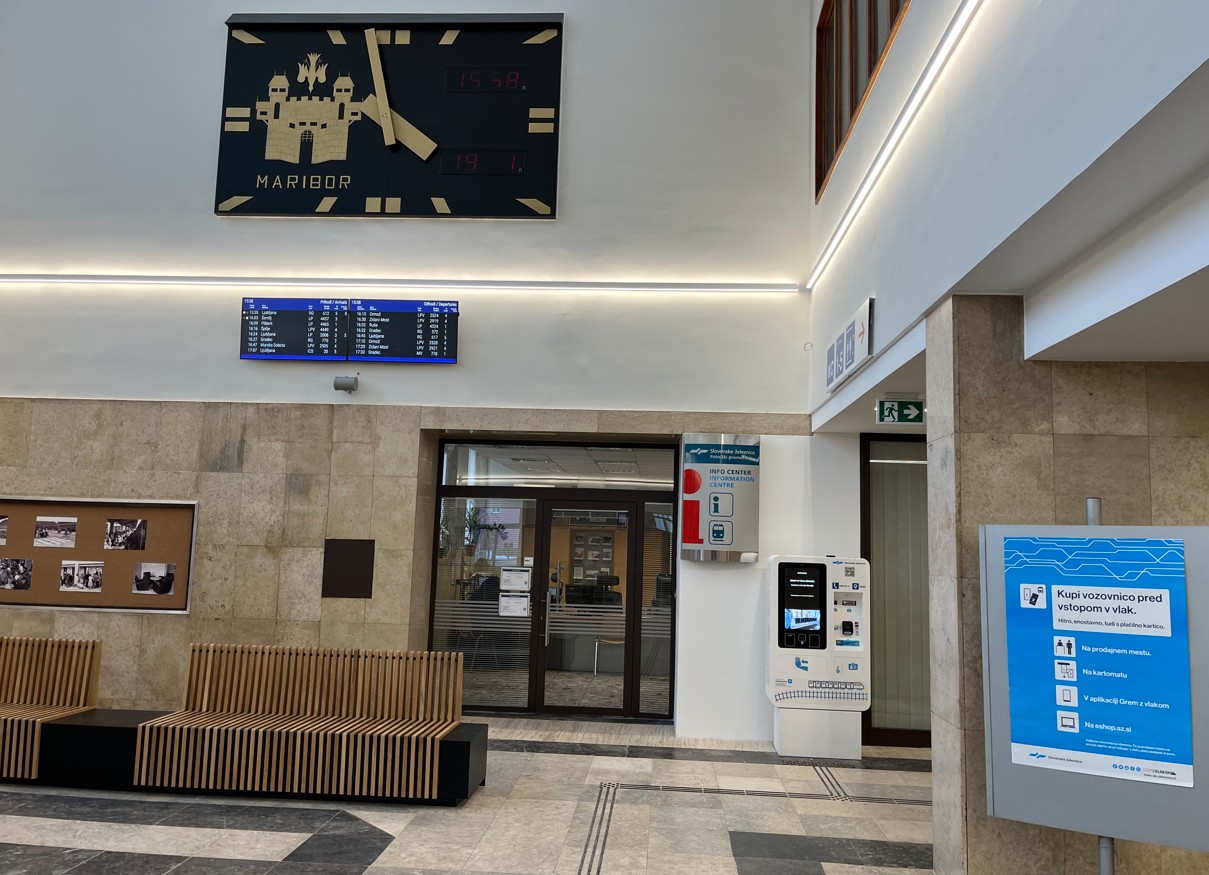
In the main hall — restored in accordance with technical and cultural heritage guidelines — a series of historical photographs is displayed beneath the station clock.
Next to Ticket Office 1, a historical ticket office has been arranged in its original form, with restored details such as the service window, furniture, and architectural elements. The displayed content will be expanded over time.
History of Maribor Railway Station
The Beginnings of the Railway Story (1844–1918)
Maribor entered the railway era in 1849 with the opening of the Southern Railway Vienna–Trieste, a line that profoundly influenced the city’s development. A few years earlier, in 1845, the first station building was constructed in the area of the Graz Suburb, forming part of one of the most important infrastructure projects of its time.
The arrival of the railway sparked rapid urbanisation and economic growth — the population increased from 4,168 (1851) to 31,337 (1900). Maribor became a regional transport crossroads, connected to Trieste, Budapest, and Klagenfurt (via the Carinthian line, opened in 1863).
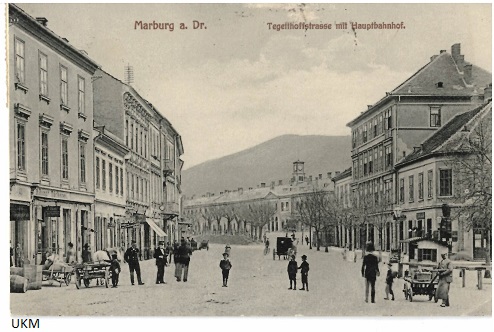
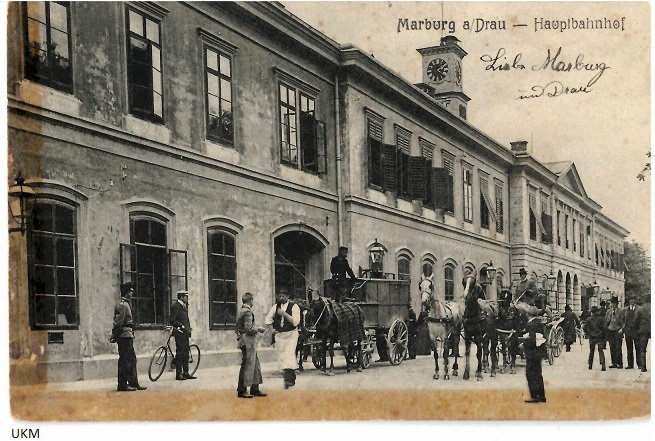
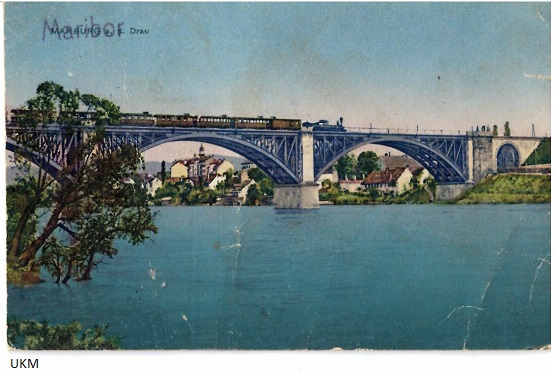
Photo source: Maribor University Library
War Destruction and the Birth of a Modernist Landmark (1945–1957)
During the Second World War, the original railway station was completely destroyed in heavy air raids. Since the transport hub had to be restored as quickly as possible, architects Milan Černigoj and Dušan Černič prepared new conceptual designs in 1949. The building permit was issued in 1955, and the modern station was completed in 1957.
The new station was designed as a prominent example of modernist architecture, featuring:
- a façade clad in white stone,
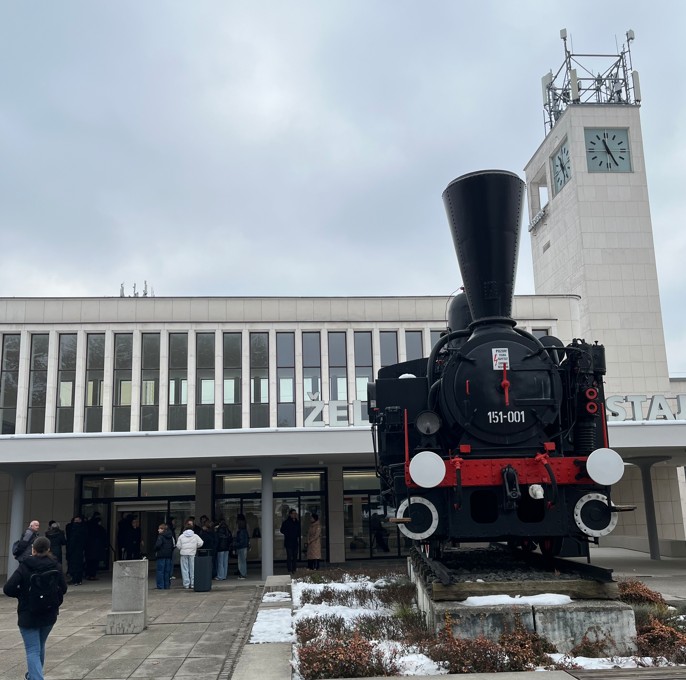
- a monumental clock tower,
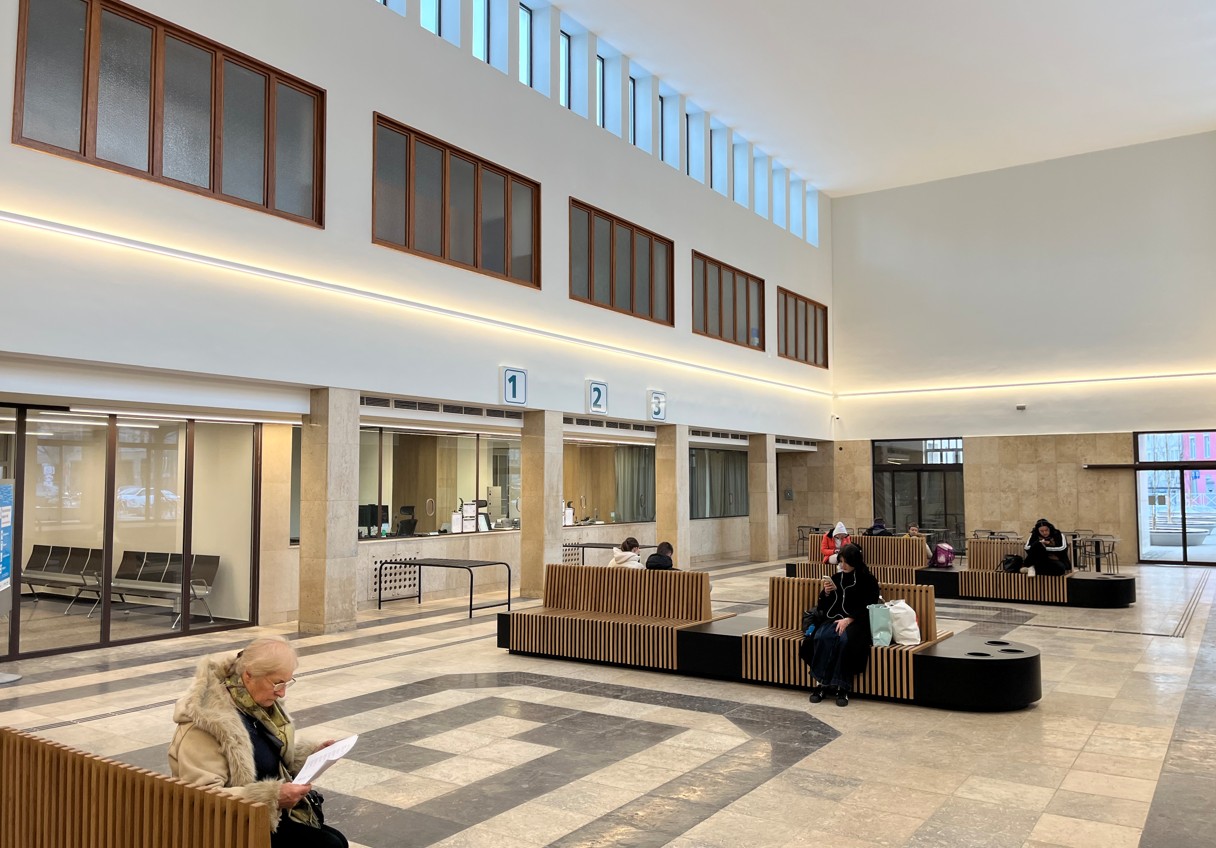
- a spacious two‑level hall with an underpass,
- the characteristic black‑and‑white spiral stone flooring,
- “basilica‑style” lighting from tall rectangular windows.
Today, the building is protected as an important part of the city’s architectural heritage.
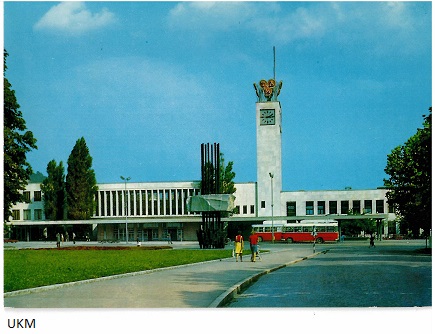
Photo source: Maribor University Library
Modernisation and Electrification (1972–2021)
Leta 1972 je bila elektrificirana celotna proga med Mariborom in Zidanim Mostom, kar je pomenilo konec parne in dizel vleke na tem odseku.
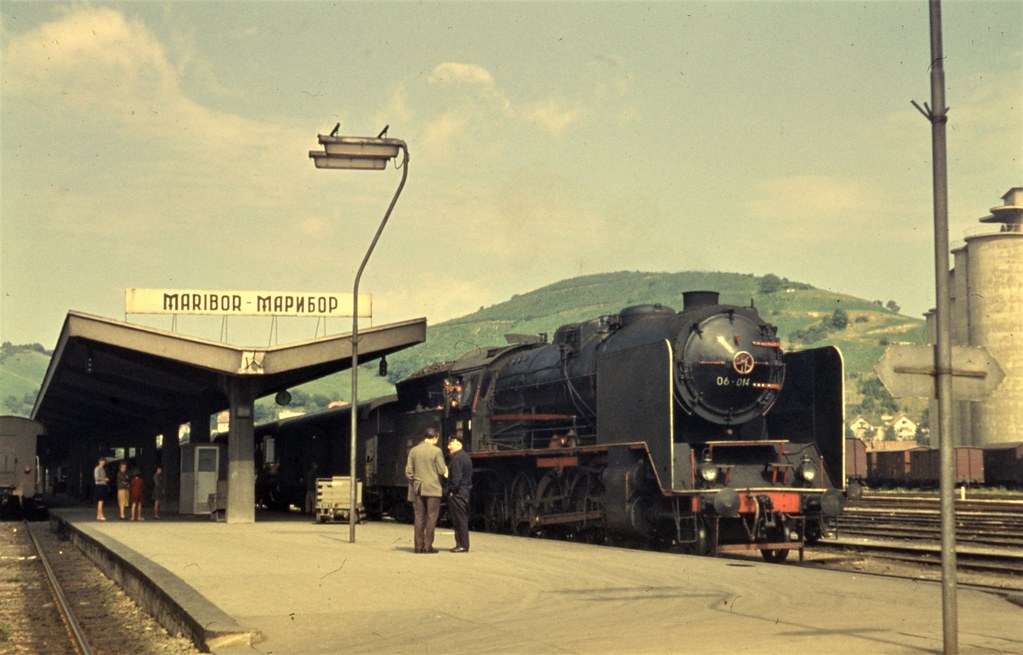
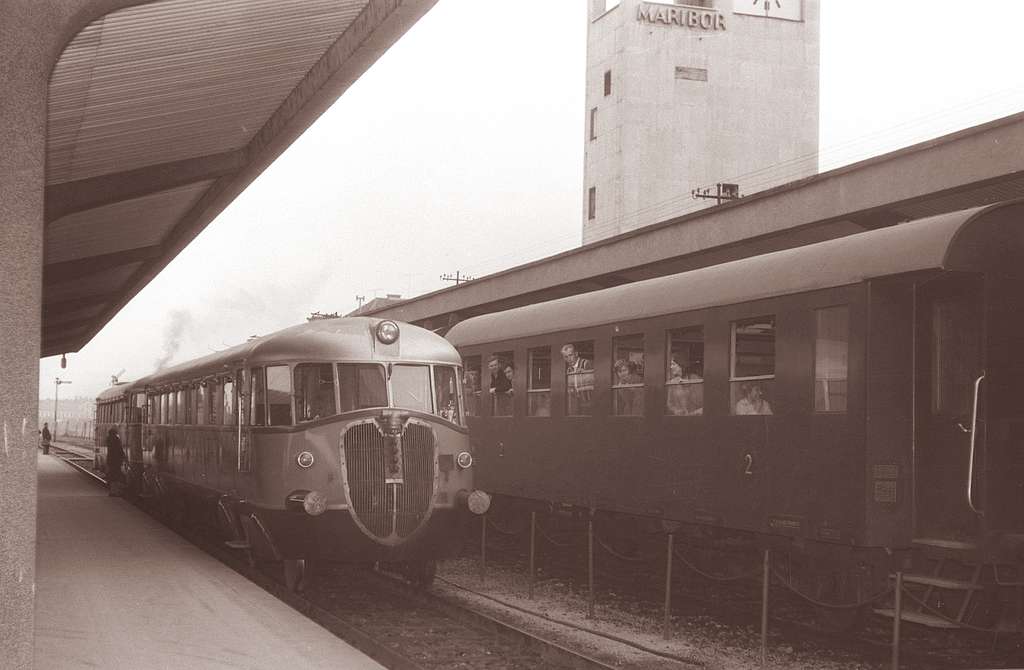
Photo source: Maribor University Library
In the following decades, gradual improvements were made, but the largest upgrade took place between 2019 and 2021, when tracks, underpasses, platforms, shelters, lifts, and noise‑protection systems were modernised. The €55.5‑million project was part of a broader EU‑co‑funded upgrade of the Maribor – Spielfeld-Strass (Austria) line.
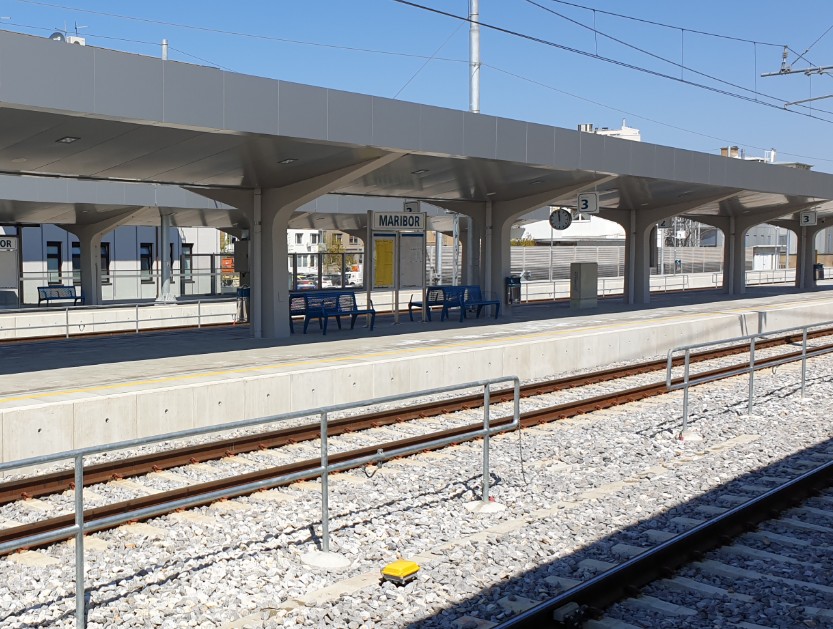
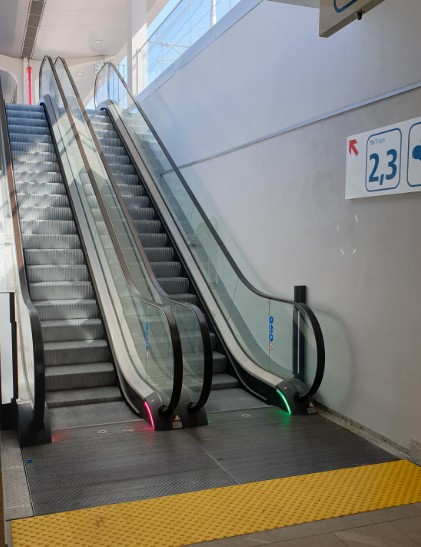
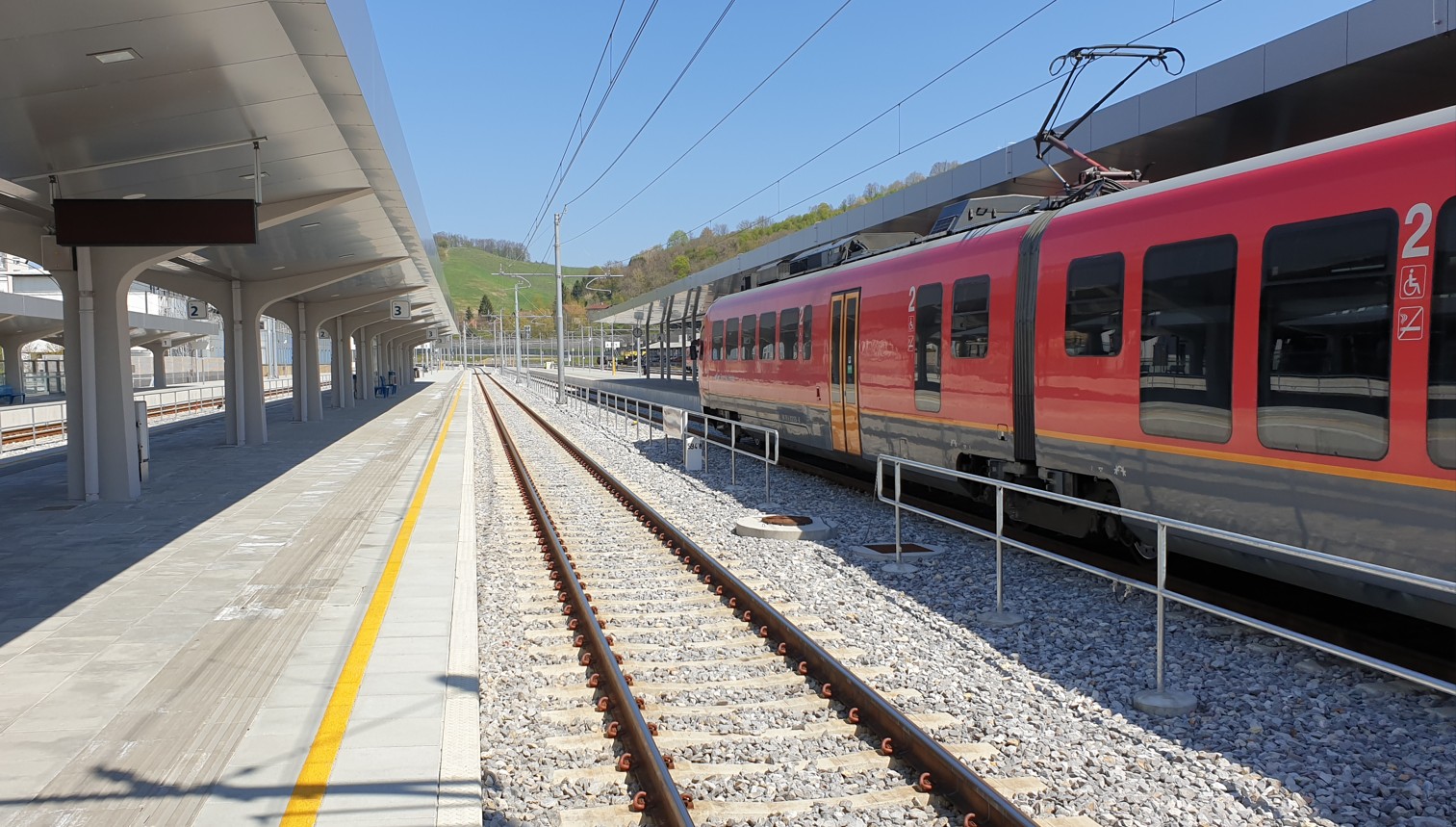
Photo source: Slovenian Infrastructure Agency
Renovation of the Main Hall and Station Forecourt (2025–2026)
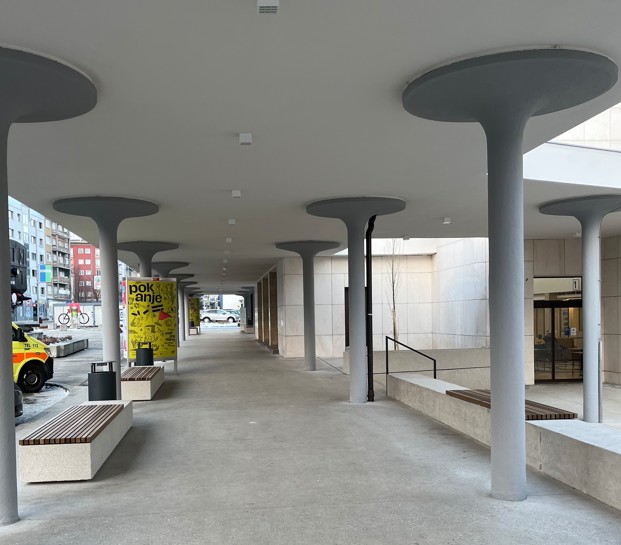
In August 2025, an extensive renovation of the main hall, ticket offices, and exterior station area began. The works were completed in January 2026, in accordance with strict cultural‑heritage protection requirements set by the Institute for the Protection of Cultural Heritage of Slovenia (IPCHS).
Main Improvements
The renovation included:
- new sliding doors and clearer circulation paths in the hall,
- restoration of the heritage‑protected staircase,
- refurbishment of the stone flooring, windows, and the station clock,
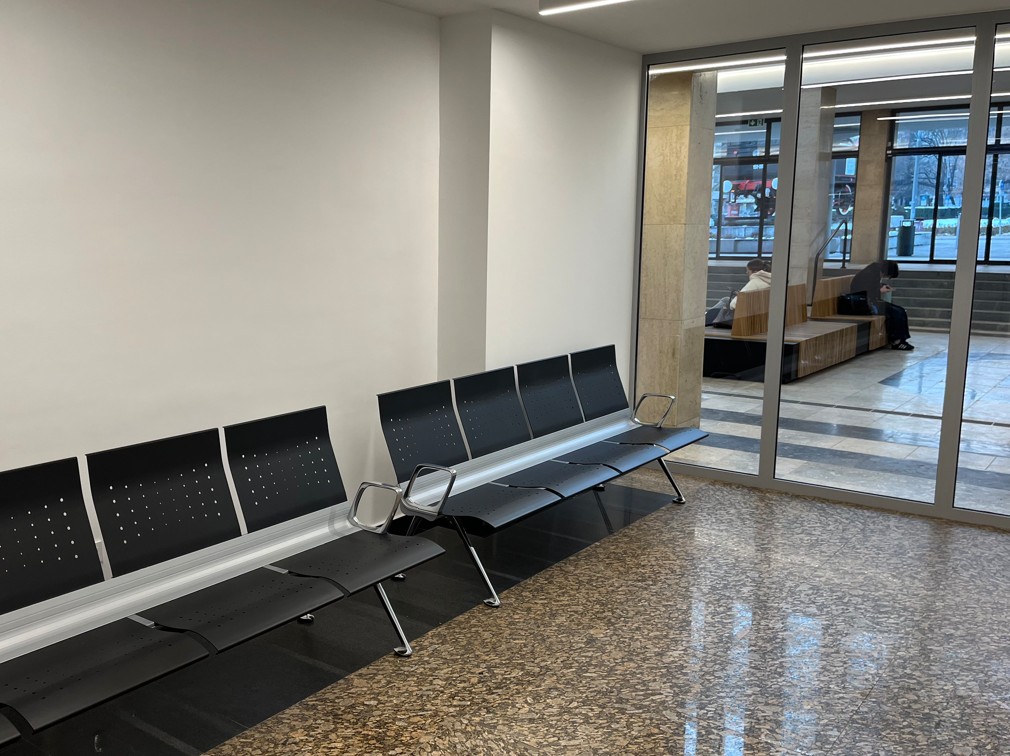
- creation of a new waiting area,
- installation of ticket vending machines in the hall and at the entrance,
- upgrades to heating, ventilation, and air conditioning,
- renovation of passenger and staff restrooms,
- complete redesign of the southern forecourt with new paving, urban furniture, lighting, and tree planting,
- cleaning of the façade stone and restoration of the main entrance steps.
Preservation of Historical Elements
Despite the extensive renovation, preserving original architectural features remained a top priority. Restored elements include:
- the original spiral‑pattern stone flooring,
- the historic windows and light bands,
- the passenger ticket offices,
- the old station clock.
As a result, the modernised hall retains the spirit and character of the 1950s while offering travellers today and in the future all essential modern amenities.
More Information and Sources
kamra.si (The Railway Station and the Railway Bridge)
kamra.si (Maribor and the Railway)
gov.si (Maribor Railway Station: New Look of the Main Hall and Forecourt)